The cycle in plain words: ammonia, nitrite, nitrate
Fish and shrimp produce waste, and leftover food rots. All of it breaks down into ammonia, which is poisonous even in small amounts: it burns gills and skin and stresses animals long before you can see anything wrong. A brand-new tank has no defence against it. "Cycling" means growing the defence before the animals arrive.
The defence is two teams of bacteria that live on surfaces — mostly in your filter media, but also in the substrate and on hardscape and leaves. Hardly any of them float in the water itself, which is why clear water proves nothing.
- Team one eats ammonia and turns it into nitrite. This is progress, but nitrite is also toxic; it stops blood from carrying oxygen properly.
- Team two eats nitrite and turns it into nitrate. Nitrate is the safe-ish end product: animals tolerate it at low levels, plants eat it as fertiliser, and your weekly water changes keep it from creeping up.
So the cycle is a relay race: ammonia spikes first, falls as team one grows; nitrite spikes next, falls as team two catches up; nitrate quietly rises the whole time. When a tank can run the full relay quickly, it is cycled. Everything else in this guide is just how to feed the race, measure it, and know when it is finished. If you have not set the tank up yet, work through the setup order in our complete planted tank setup guide first; the cycle starts the day the filter starts.
Why planted tanks cycle differently (the silent cycle)
Plants are not passive decoration in this process; they eat the same chemicals. Most aquarium plants take up ammonium (the less toxic form of ammonia) preferentially, because it costs them less energy than nitrate. Fast-growing stems will also absorb some nitrite and plenty of nitrate. A densely planted tank therefore often shows smaller, shorter spikes than a bare one, and this is where the term "silent cycle" comes from: the classic spikes may be so muted you barely see them.
Plants help in two quieter ways as well. They arrive from the nursery carrying nitrifying bacteria on their leaves and roots, a small head start for your filter. And their roots push oxygen down into the substrate, keeping the bacterial neighbourhood there healthier.
One practical consequence surprises many beginners: in a well-planted tank you may never see a nitrite reading at all, because plants and bacteria mop it up as fast as it forms. Zero nitrite with rising nitrate and falling ammonia is a normal, healthy planted-tank pattern, not a broken test kit.
Fishless cycling, step by step
Fishless cycling grows the bacteria using bottled ammonia instead of animals, so nothing suffers while the water is toxic. You need a liquid test kit (ammonia, nitrite, nitrate) and a pure ammonia source: aquarium-specific ammonium chloride products are easiest to dose, and any household ammonia must be plain and unscented, with no surfactants. If a shaken bottle foams like soap, do not use it.
- Run everything. Filter on, light on its timer, heater on. Warm water grows bacteria faster, so a fishless cycle at around 78-82°F (26-28°C) usually moves quicker than a cold one.
- Dose ammonia to about 2 ppm and confirm with the test kit. Two ppm is plenty of food for the colony you need, and it is the level your finished tank will be tested against. More is not faster: bacteria are inhibited at high concentrations, and levels above about 5 ppm can stall the cycle entirely.
- Test every day or two. For the first week or so, ammonia may barely move. That is normal; team one is small. Log the numbers rather than trusting memory.
- Top up the food. When ammonia falls below about 1 ppm, dose back to 2 ppm. Skipping this starves the colony you are trying to grow.
- Wait out the nitrite phase. Team two grows more slowly, so nitrite can spike (2-5 ppm readings are common in unplanted tanks) and sit there for a week or two before crashing. Patience is the whole job here.
- Do not water-change the cycle away. Changing water removes the ammonia and nitrite the bacteria are growing on. The exception: if ammonia climbs well above your target (say, past 4-5 ppm after an overdosed start or a very rich aquasoil), do a partial change to bring it back into range.
Bottled "quick start" bacteria are optional. Refrigerated, in-date products can shave some days off; shelf bottles are hit-and-miss. Borrowed filter media from a healthy, established tank is the one genuine shortcut, because it imports a working colony rather than spores and hope.
Reading your test kit without panicking
Use a liquid test kit rather than dip strips, which are notoriously unreliable for ammonia, the reading that matters most. Compare colours in daylight against the chart, and read each test at the time its instructions specify.
The healthy pattern, in a bare tank, looks like this: ammonia high and steady, then falling; nitrite zero, then spiking, then crashing; nitrate climbing throughout. In a planted tank expect the same story with the volume turned down, including possibly no nitrite spike at all (see the silent cycle above). What you are watching for is not any single number but the direction of travel over days.
Two interpretation traps catch everyone once. Some ammonia kits read total ammonia (ammonia plus ammonium), so a small positive reading in a planted tank is not automatically an emergency; watch the trend. And very high nitrate can distort some nitrite tests, another reason to log all three together rather than chasing one colour.
How long does it actually take?
| Phase | Typical window | What you see |
|---|---|---|
| Ammonia phase | Roughly days 1-10 | Ammonia holds near your 2 ppm dose, then starts to drop noticeably |
| Nitrite phase | Roughly days 10-25 | Nitrite rises (or stays hidden in a planted tank), nitrate climbing; this phase feels endless and is normal |
| Completion | Roughly weeks 3-6 overall | A 2 ppm dose clears to zero ammonia and zero nitrite within 24 hours |
Published timelines range widely, from about 2 weeks with seeded media to 8 weeks in a cold, slow start. Temperature, the ammonia level you maintain, and whether the tank is planted move the dates; the finish-line test does not move. Judge by the test, not the calendar. And if your plants are melting a little during these weeks, do not read it as cycle failure; converting leaves is what new plants do, as we explain in why aquarium plants melt.
When it is safe to add shrimp and fish
The finish line is a test, not a date: dose the tank to about 2 ppm ammonia, and 24 hours later both ammonia and nitrite must read zero, with nitrate present. Pass it two days in a row and the bacterial side of the tank is ready.
Then, before any animals go in, do one large water change, around 50%, to pull the accumulated nitrate down to a modest level, and let the temperature settle to the range your livestock wants. After that:
- Stock gradually. Add a first small group, feed lightly, and test ammonia every day or two for the first week. The colony grows to meet the load; a full stocking list on day one can outrun it even in a cycled tank.
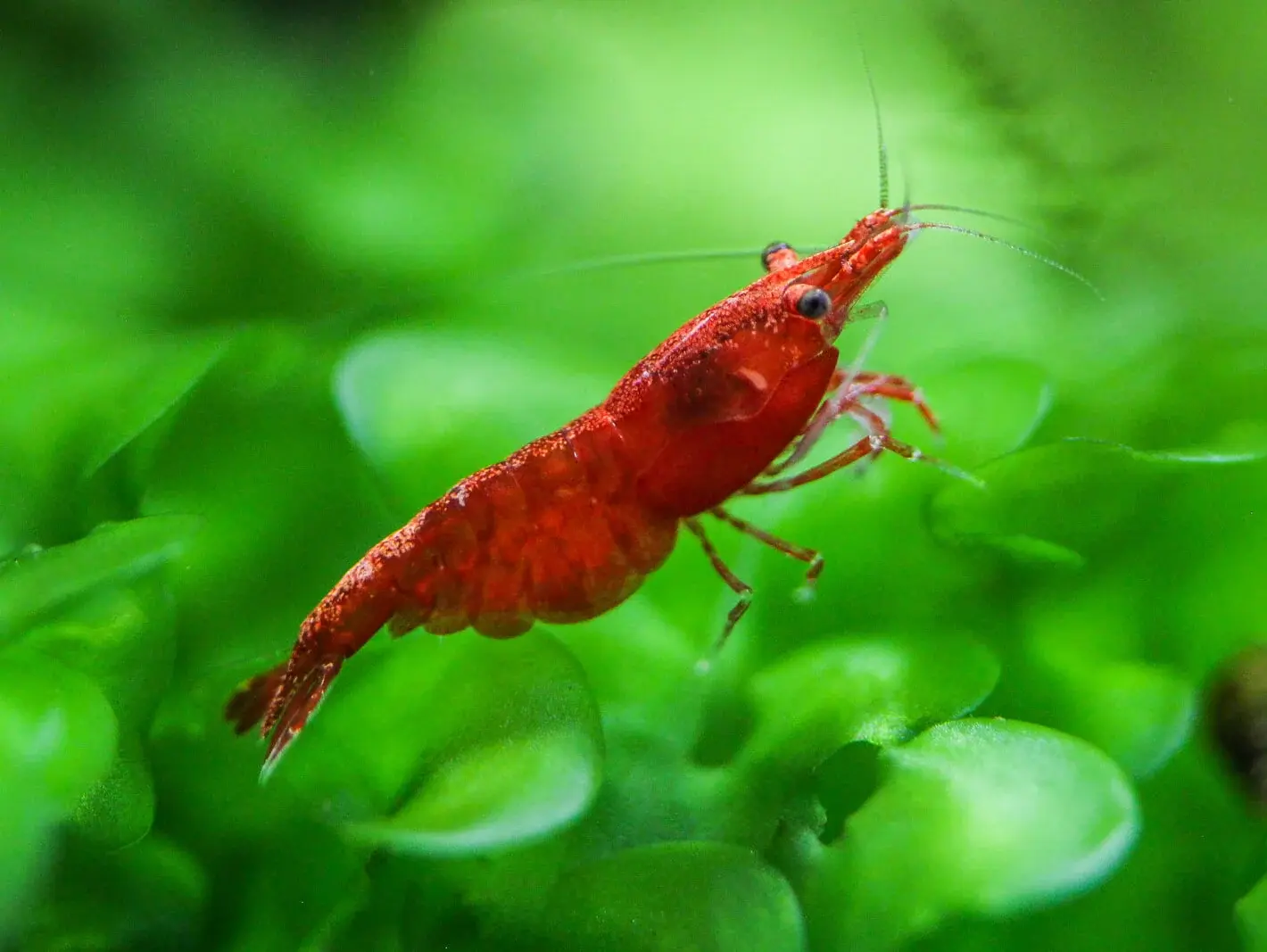
- Shrimp go in later than fish. Cherry shrimp and their relatives graze on biofilm and soft algae that a brand-new tank barely has, and they dislike fluctuating water. Give the tank a few extra weeks of stability after the cycle, once there is visible grazing growth, and they will fare far better. This patience is the least glamorous and most effective shrimp advice there is.
- Keep testing after stocking. A mini-spike in the first week means feed less and change water, not panic-buy products.
Planning a low-tech tank that leans even harder on plants for stability? Our low-tech planted tank guide covers how plant mass and stocking balance each other in a no-CO2 setup.
Mistakes that stall the cycle
- Adding livestock on day one because the water "looks ready". Ammonia is colourless and odourless at aquarium levels; clear water has ended more fish than cloudy water ever will.
- Over-cleaning the filter. Rinsing bio media under untreated tap water, or replacing it because it looks brown, throws away the colony you spent weeks growing. Media is supposed to look lived-in. When flow slows, swish it gently in a bucket of removed tank water.
- Overdosing ammonia. Dosing "a bit extra to speed things up" can push ammonia into the range that inhibits the bacteria and adds days or weeks.
- Starving the cycle. The opposite error: dosing once, never testing, and letting ammonia sit at zero for a week while the colony shrinks back.
- Chasing the numbers daily with products. Test, log, adjust one thing. A cycle that is fed, warm and left alone finishes sooner than one that is constantly rescued.
The nitrogen cycle rewards exactly one virtue: patience with a test kit. Feed the bacteria, watch the relay race happen in your logbook, and stock only when the 24-hour test says yes. Everything after that is the fun part.